Monday, May 28, 2012

What we do my friends..

What we do, my dear friends, in the world, after all, does not amount to much;one of the thing we have to get over thinking;is that we are here chiefly to do something. In God's providence, we are all here to be something, and what we are speaks and does more than the things we call actions.


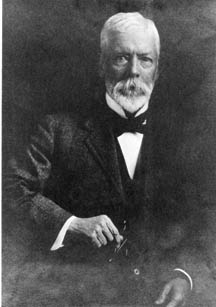
Thomas Lamb Eliot


I got a card from a roomful of people the other day.  You, know, everyone signs it and some of them know you well, some not at all.  Some of them love you and some of them are kinda glad to see the back of you. Still I love getting those cards. I read them, hoping to find something interesting, some insight into how others see me.  One sentiment was from a friend who is as busy as Thomas Lamb Eliot was (see previous post). She wrote "thanks for all you do." I fell that tiny little stab of disappointment when a compliment misses the mark. 

Yet I know I have written that on people's cards under similar circumstances. I wrote it as a compliment and a way of saying, 'I noticed how much you do.' One of the things that happens in the world of do-gooding and community engagement is no one usually DOES notice.  So I have given it out as a compliment. But, no more.

If you are someone who obsessively does things, then you don't need to be encouraged in your mild derangement. If you aren't, you do it as an expression of who you are, then you would like to have your shining self noticed once in a while. Next time, I am going to say 'thank you for your wonderful self.'  or 'I love your wisdom and understanding.' or even ' I am going to miss your beautiful smile."

TLE wrote the above words at his retirement celebration after a lifetime of being celebrated for all he did.  He did a lot, but he had come to see that the doing was not what it was about.  He was a mature minister formed in the fires of his work and when it was all done, he was more then that work, and he knew it.

Blessings on what we are.

Tuesday, May 8, 2012

Dead Guys I Think About


It's more than think . . . . I find myself connecting emotionally, imaginatively, across the years to dead people. Mostly guys. I am finishing up an MDiv program and often we are asked to research someone. Usually they are men because history, regrettably, erases women from the scene. The research often leaves me with a trace of emotional connection like that hint of scent through a window on a warm summer night.


The most recent of my dead guys is the Reverend Thomas Lamb Eliot, 1841-1936. I discovered Eliot before I wrote a paper on him. Every once in a while someone writes an article about his accomplishments. He lived in Portland, Oregon for seventy years, was the first Unitarian minister in the Pacific Northwest, and must never have slept because his list of accomplishments is ridiculously long: Forest Park, the Boys and Girls Aid Society, Portland Parks (he was the one who brought in the Olmstead brothers), Superintendent of Multnomah County schools, The Oregon Humane Society (first in the nation), Portland Association of Charities, Portland Historical Society, Portland Library Association and Portland Art Association. Those are the easy to rattle off items, but he was also involved in suffrage for women, city charter reform, prison reform, mental health reform and, really, any progressive cause that fell like a beaten horse across his path. 


I easily identify with his activism. I love civic activism and engage in it as a religious practice. I can feel the web of support being created through boards and positive political influence. My tradition however has a tendency to go for the long bomb. It wants to end poverty, end racism, perhaps change our economic system for something resembling the Kingdom of God. Nothing big mind you, just everything.


In the currency of good work, I can wave Thomas Lamb Eliot around like a thousand dollar bill. See, I want to say, civic engagement IS a proud part of our tradition.


However, when you connect with these dead guys from the past, the more you dig, the more you find the sweet, sad parts of their soul. Thomas Lamb Eliot's family was part of a moral aristocracy of well-educated, well-connected Unitarian ministers.The family believed in moral culture. It was what they did,  eminently. His cousin was president of Harvard, his nephew was T.S. Eliot.  His father was the first Unitarian Minister to start a church in St. Louis, Missouri. Father Eliot was also the most influential ministerial figure of his time in St. Louis and started Washington University (where Thomas Lamb went to school).


Thomas Lamb recapitulated his father's life! Everything he did in Portland his father had already done in St. Louis. His father told him "Do not change, stick to your post, and let your influence become cumulative." One sees immediately the good eldest son doing what his father told him to do without any rebellion. Some good son's are in competition to be as violent as their father, as strong, as ruthless, as controlling, as merciless, and we can only hope that they come up short. Thomas Lamb Eliot was in competition to be good, eminently good, and he somehow managed to pull it off, with a kind and thoughtful word to everyone who crossed his path.


His story contains some episodes of overwork and collapse -- the dark side of this story. He lived before ministers had to check off the box of 'self-care' to those who evaluated them. In spite of, or perhaps because of all he did, he lived a long time and spent his retirement working for a progressive Portland. 


In his farewell address to his congregation when he retired, he said: 


What we do, my dear friends, in the world, after all, does not amount to much;one of the thing we have to get over thinking;is that we are here chiefly to do something. In God's providence, we are all here to be something, and what we are speaks and does more than the things we call actions.


His words are a surprise when you consider his life of doing. I hope he turned those words toward himself in a small moment of benediction, of being, before he tackled the next good work. 


Tuesday, March 27, 2012

Queer Eye for a Rite of Passage

I saw Queer Eye for the Straight Guy for the first time last night, through the magic of Netflix. About half way through the episode I sat up straighter; "oh my God, it's a rite of passage!"

The clueless straight guy gets the treatment because of his girlfriend. She calls in the Fab Five because she is turning 30 and as she says, "he keeps telling me he wants me to be his girlfriend forever, and I am not going to be his girlfriend forever." She has a lot of sass and her eyes are saying 'wife' or 'ex-girlfriend,' you decide.  The poor young man just doesn't know how to talk like a man -- he doesn't have the vocabulary. 'Girlfriend forever,' indeed!

At almost every turn someone is talking about how inappropriate straight guy's hair, his hygiene, his music and his decor are. The man/boy just hasn't grown up, and yet he is good looking, intelligent, sweet tempered and has a great job. He doesn't resist the gay men, he is absolutely delighted to follow their instructions. He needs to learn how to dress, how to decorate his apartment, how to cook for and entertain his honey. Finally they leave him alone, (with a camera?) and he looks a little panicked about having to perform on his own.

I guess you could call it an intervention, but I call it a 'rite of passage'. We may need more of them in our long lived technological society where adolescence can go on forever. How many stages are there?  I count three adolescence stages: 1) the pre-teen stage where one is awkwardly leaving childhood, 2) the high school stage that so many of us hated 3) the college stage that can last quite a while with apprenticeships, grad school and the various ways of living the young, single life. Then next stage is adulthood and the fast-food dinners and filthy bathrooms are starting to look a little sad.

Straight clueless man-child needed a whole minivan full of gay men to show him how to grow up.  It's rather sweet, and makes some odd sense to call on gay men. In that last transition into manhood, the boy/man needs to integrate feminine virtues. A young man spends all this time, being messy and not knowing how to nurture himself. During adolescence, it can be a point of strange pride to take poor care of oneself. Young men want to be all yang, and don't even know that they need to incorporate in some yin to be a whole person; an adult. What if you just don't know how; who is going to teach you; who, can you honorably learn from? Probably not a woman, that would be too much like listening to mom. Well, gay men are famous for integrating the feminine into their lives and in a stylish way!

I don't know how else it can be done. In our movies, traditionally meeting the girl has been civilizing. But lately meeting the girl in movies has been a stubborn jokey time of resisting mightily the call to grow up. Maybe we need a new set of rituals for moving into manhood.

Friday, July 29, 2011

Thesis Time

When a Masters program is four years long, at the beginning it feels eternal.  This is my life, this is what I do. I go to school and that is that.  There are blessings to that closed horizon.  If you are supposed to live in the moment, you are living in a four-year moment that feels protected somehow.  School is life simplified.

Last week I started my thesis and if I have been in Plato's cave, its been a full of fuzzy shadows.  I have a strong set of archetypes that I associate with school and my school has not always lived up to the archetypes.  However, thesis is another time for fulfilling another dream.

I can feel myself trying to live out this ideal of the student focused on one pursuit.  Someone who walks into walls as she thinks.  So far it is going well.  I am a little behind the imposed schedule, but not worried about it.  I am clearing the decks.  Today I need to write a paper on Islam to clear more space in my brain.  The paper finishes the only other class I am taking -- then i can really concentrate.

Tuesday, June 28, 2011

Old Time Religion

I am taking a history of Christianity in the middle ages class:

“The truth is that there was a price to be paid for the Frankish experiment in creating a Christian social structure and culture. It gave to the western Church a wonderful sense of unity and coherence; it gave to western society great dynamism, which lies at the source of the European impact on the world. But it involved a degree of doctrinal, liturgical and, at bottom, cultural and racial intolerance, which made an ecumenical Church impossible. Unity in depth was bought at the expense of unity in breadth. The Christian penetration of every aspect of life in the West meant a highly organized, disciplined and particularist ecclesiastical structure, which could not afford to compromise with eastern deviations.” 
A History of Christianity, Paul Johnson, page 185


Johnson tosses off the point that the West had a dynamism that the East and other cultures didn't have because of this depth of integration. Is that why? Isn't this a weird kind of Western chauvinism? We dominated because of this integration which also made us intolerant jerks, but that is the price of empire. I am not sure if this is true. There were probably other reasons that we came out on top -- accidental reasons. 

If you have read Jared Diamond's book Guns, Germs and Steel, you know that there were reasons having to do with geography that favored the broad temperate areas of Europe. If one is looking only at the history of religion, then one thinks it is running the show but perhaps it is just riding on top of other forces that are so integral that we don't see them.

If one looks at all the insanely stupid things that went on, coming out of the West (crusades anyone!), one has to think that we must had some advantage to maintain 'the West' during that time. I am just not sure it was the integration of church with society. In fact, history shows that the West really took off when society began to be dis- integrated. It was then that we dominated, not before when the Ottoman empire was the West's equal.

It is difficult reading the history of politics and the monastic orders, it's so horrific.  There are some alternative movements that ran through the history which give a little relief.   There were the Third Force people, who were reasonable reformers, and Millenarianists, nutty but populist.

In fact Johnson uses the Third Force as a wonderful writer's device.  He could have covered the Reformation and then the Counter Reformation and it would have read like a tennis match. By focusing a whole section on the Third Force you have a counterpoint to the warring.  They are like the narrator in the Great Gadsby, concerned but trying not to get burned as they watch the passionate people do their destructive thing; but also hoping it will turn out well against all the evidence. 

 I shared with my son some of the Sebastian Castellio's quotes “I have carefully examined what a heretic means and I cannot make it mean more than this; a heretic is a man with whom you disagree.” “To kill a man is not to defend a doctrine; it is to kill a man.” “Who would not think that Christ a moloch, or some such God, if he wanted men to be immolated to him, and burned alive?”. (318) My son put them on his face book page.

As a Unitarian Universalist I feel that the history of my movement is in the Third Force people. This is a bit of a stretch but the Millenarianists are probably a part of our movement also, represented by the Universalist side of UU.  Forgive me Universalist ancestors, the Universalists were not concerned with the end of the world, or violent like the Millenarianists or even focused on a particular charismatic figure, but they were a populist movement. Like the Millenarianists they had their day and just petered out. Now our movement is known most for its Unitarian roots, because they left a body of writing through Emerson and the other Transcendentalists. At the turn of the century, and in the 20's there were millions of Universalists, but by the time they merged with the Unitarians in the 60's there was a remnant left.  They are both honorable traditions -- I am glad to have both of them backing me up.  If I seem a little nervous it's because the Middle Ages were an Age and neither the Third Force or the Millenarianists prevailed during that long stretch of time.

Monday, June 20, 2011

Mytheology

I have been putting off writing a paper.  In blog land that must be a pretty common statement (Probably even common in tweet-ville too).

Today I make the first steps toward paper generation. I begin with the fingers rather than the brain.  'Ok, start OpenOffice Writer, name the new file'. Done--then I go do something else.

This paper is my final personal theology paper for my MDiv program.  It should be freighted with significance, but by now I am just weary and beginning to write perfunctory papers.  I am at least pleased that this final one is for a teacher who cares.

When I come back I can't find it, and have a moment of 'where did it go?' confusion.  Then I see it.  I named it My Theology, or as it shows mytheology.  Hmmm, nice.  I have invented a new word that is so different from what I originally wrote that it is unrecognizable. It seems to mean something special in its new incarnation.

Signs sometimes appear where least expected.

Monday, December 27, 2010

UU community of scholars

Sometimes I long for a UU community of scholars.  Perhaps it is time to seek out other UU's on some issues.

I am writing a paper on theological reflection.  I've enjoyed the class and found some resources on the UU website that I shared with my class.  There is a wonderful list of names for God that came out of the UU hymnbook.  Every time I share that list, people, my people, the hungry spiritual skeptics, and some others, the non-skeptics who want to stretch out of the limiting box of names for God; jump up and shout, draw, sing and dance.  It really is a wonderful list.

However the class on theological reflection makes me nervous about my own tradition.  I love going deeper and digging into a tradition to find those precious theological insights.  What could be better for a theology nerd?  I have discovered Meister Eckhart, Rebecca Parker and Sallie McFague through my classes.  All of these theologians are Christian although all three are pioneers and occasionally wanderers around the edges of the faith.

However, it reminds me of the no man's land of Unitarian Universalism.  We don't have a central scripture or a place to dig deeper.  We have permission to dig anywhere.  We see the wisdom in all the worlds wisdom traditions, including earth based and humanism, plus our own experience, plus prophetic men and women.  It brings to mind a bunch of people out there digging digging, one under a cliff, and one on top of it, one out on a plain, another by the sea.  Perhaps we can shout our insights at each other and hope the wind doesn't carry it away.

I know this isn't the final answer (but I do love extending a metaphor :)) however if I was taking UU theological reflection at a UU university, perhaps I would have some strategies taught me that would help me do this in community.   One of them is the names for God -- but then what does one do after the names for God.  How to go deeper in community?